ChatGPT
Provider
OpenAI
Primary posture
Conversational assistant
Commerce adjacency
Strong shopping surfaces (observed)
Citation posture
Variable; less citation-first
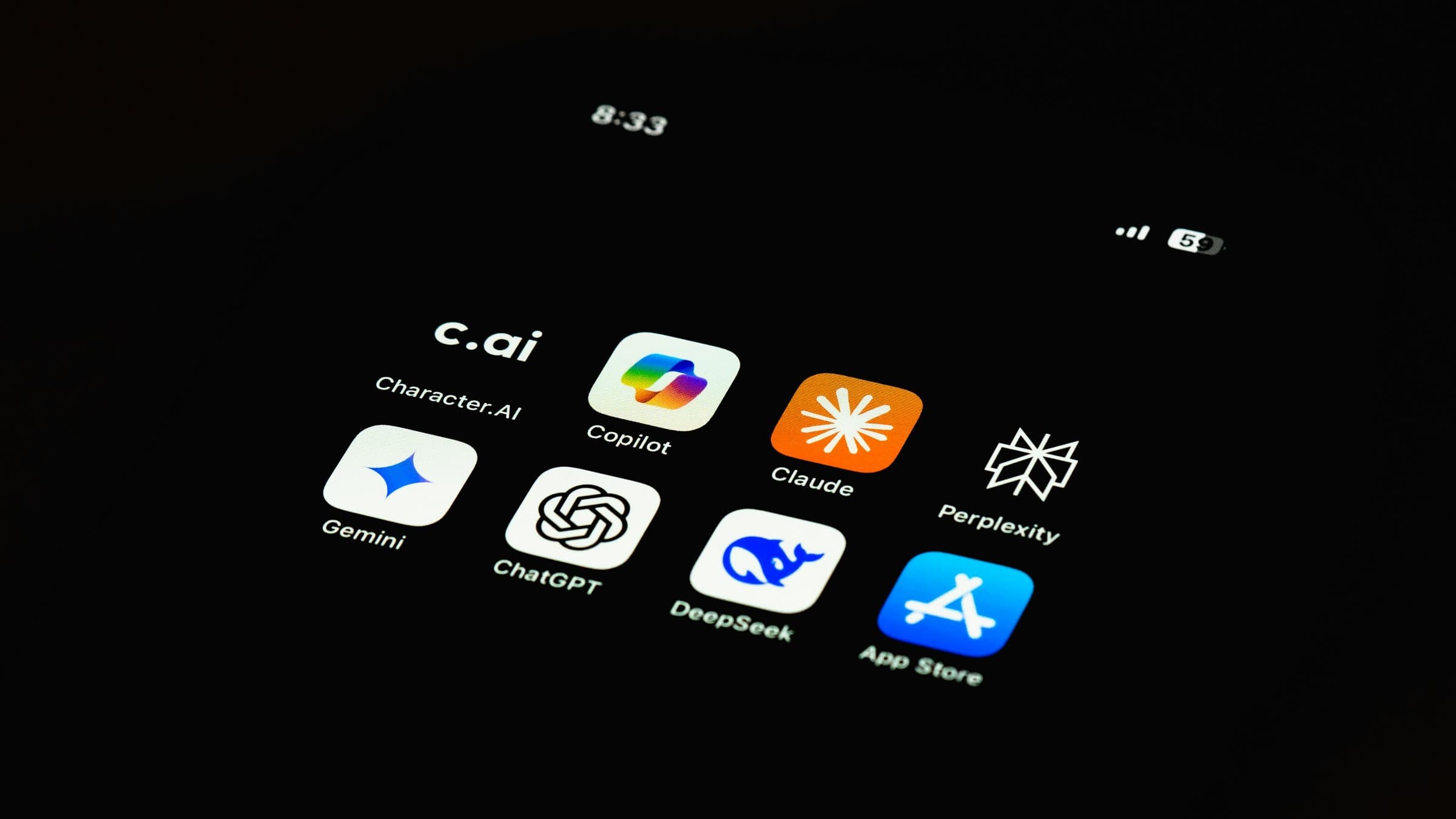
How ChatGPT, Gemini, Claude & Perplexity compare for brand discovery and recommendations: FutureFox Labs' multi-platform benchmark with scorecards, methodology, and executive guidance.
ChatGPT, Gemini, Claude, and Perplexity now sit at the front of many premium purchase journeys. Buyers ask which brand to trust, which product to buy, and which option wins a comparison. This FutureFox Labs benchmark evaluates how those four AI search platforms perform for brand discovery and recommendations in 2026, without declaring a universal winner.
The paper is written for CMOs, VP Marketing leaders, ecommerce directors, SEO and GEO owners, and strategy teams who need a decision-grade comparison. It introduces FutureFox IP including the Platform Recommendation Index, Recommendation Transparency Score, Citation Confidence, Recommendation Stability, Entity Intelligence, Commerce Intelligence, Prompt Consistency, and Evidence Resolution. It distinguishes publicly documented platform capabilities from FutureFox observations under a controlled prompt set.
Executive Takeaway
No single AI search platform wins every commercial job. ChatGPT leads shopping-led recommendation experiences. Gemini leads entity-adjacent freshness and Knowledge Graph-linked discovery. Perplexity leads citation transparency. Claude leads careful reasoning and long-form research. Premium brands should optimise the Evidence Graph for all four, then measure recommendation share by prompt cluster.
Four findings organise the benchmark. First, AI search is not one product category: the platforms share generative interfaces but differ in retrieval posture, citation behaviour, shopping surfaces, and enterprise suitability. Second, brand recommendation quality correlates with Entity Intelligence and corroborable third-party evidence, not with brand fame alone. Third, citation-rich answers and commerce-fluent answers are related but not identical outcomes. Fourth, Prompt Consistency across platforms is uneven: the same commercial question can yield stable shortlists on one surface and volatile ones on another.
The Platform Recommendation Index is designed for commercial operators who need one number to trend over time per platform, while still reading the category scorecard underneath. PRI is not a substitute for qualitative review. It is a dashboard metric that prevents teams from overreacting to a single viral prompt anecdote.
Recommendation Transparency Score protects a different stakeholder: trust and risk owners. A platform can drive revenue recommendations while leaving auditors unable to see why. Enterprises that sell into regulated or reputation-sensitive categories should track transparency beside PRI rather than collapsing both into one vanity score.
Citation Confidence, Recommendation Stability, Entity Intelligence, Commerce Intelligence, Prompt Consistency, and Evidence Resolution are diagnostic lenses. When PRI drops, these lenses tell you whether the failure was identity, corroboration, commerce detail, retrieval churn, or paraphrase fragility. Without diagnostics, teams remediate randomly.
Category leaders in this study: Overall Recommendation Quality favours ChatGPT by a narrow margin on shopping-framed brand shortlists; Best Ecommerce and Best Shopping also favour ChatGPT; Best Research and Best Reasoning favour Claude; Best Citations favour Perplexity; Best Enterprise favour Claude for diligence workflows; Best Consumer Experience favour ChatGPT, with Gemini close where Google ecosystem continuity matters. Treat leaders as job-specific, not absolute.
For finance and strategy stakeholders, the implication is portfolio risk management. Over-concentration on a single assistant creates channel risk analogous to over-concentration on a single retailer or marketplace. Diversified Evidence Graph investment is the hedge: one remediation programme, many surfaces, separate scorecards.
For creative and brand stakeholders, the implication is extractability. Campaign narratives still matter for humans. Machines need the facts inside those narratives to be consistent, structured, and corroborated. The brands that win AI recommendations will not abandon storytelling; they will make storytelling legible to retrieval and synthesis systems without flattening brand meaning into generic attribute spam.
Premium ecommerce discovery is migrating from ranked lists to synthesised judgment. When a traveller asks for the best luggage brand, or a buyer asks whether Patagonia or Arc'teryx fits alpine use, the system often answers with a shortlist and a rationale. That moment is commercially decisive. It is also structurally different from classic SEO: inclusion in the answer can matter more than position on a results page.
The shift is uneven across demographics and categories, yet it is directionally clear for digitally fluent premium buyers. Even shoppers who still finish on Google or a brand site often begin with an assistant asking whom to trust. That beginning rewrites attribution. Brands that only measure last-click SEO will understate the Recommendation Layer's influence on demand.
FutureFox Labs published How AI Search Recommends Brands to explain the recommendation layer. This companion benchmark answers a practical leadership question: how do ChatGPT, Gemini, Claude, and Perplexity compare when the job is brand discovery, product recommendation, comparison, citation, and shopping guidance?
Key Insight
Platform choice for users is already fragmented. Brand strategy that assumes a single AI assistant will inherit incomplete coverage. The operating requirement is multi-surface Recommendation Readiness.
We evaluate documented capabilities where vendors publish them, and we report FutureFox observations from controlled prompt testing. We do not claim insider ranking formula knowledge. We do claim that comparative behaviour under commercial prompts is measurable enough to guide investment in SEO, GEO, AEO, and AI Search Optimization.
The audience for this paper already manages complex stacks: organic search, paid media, CRM, marketplace, and brand PR. AI search adds another allocation mechanism for attention. Brands that treat it as a measurable channel, with owners, prompts, and scorecards, will compound advantage. Brands that wait for perfect disclosure will optimise last year's funnel while competitors occupy the Recommendation Layer.
This benchmark is intentionally neutral. Declaring a single best AI search engine would mislead operators whose jobs differ: shopping guidance, enterprise research, citation audits, or long-form diligence. The correct executive posture is a platform matrix, not a beauty contest.
Leadership teams should also read this paper as a governance document. Someone must own the prompt map. Someone must own entity and schema remediation. Someone must own citation development with PR. Without those owners, platform scores become interesting reading and operationally inert. The brands that convert this benchmark into a quarterly operating rhythm will outpace brands that only debate which assistant employees prefer.
Finally, neutrality does not mean indifference to quality. Platforms differ meaningfully on Citation Confidence, Commerce Intelligence, and Reasoning Depth. Those differences should shape internal workflows: where analysts verify claims, where merchandisers study shortlists, and where executives consume diligence memos. Neutrality means refusing a single-winner narrative, not pretending all surfaces are interchangeable.
This benchmark combines three layers of evidence: (1) public platform documentation and product surfaces from OpenAI, Google, Anthropic, and Perplexity; (2) FutureFox Labs controlled prompt testing across twelve commercial prompts; (3) structured scoring across twenty evaluation categories on a 1 to 10 scale, with written rationales tied to observed behaviour.
Category discovery prompts: best running shoes; best luxury watches; best skincare for sensitive skin; best luggage brand; luxury handbags; outdoor jackets; premium coffee machines; travel backpacks. Comparison prompts: Nike vs Adidas; Apple vs Samsung; Patagonia vs Arc'teryx; Rolex vs Omega. Prompts were issued in comparable conversational form, without brand coaching, across consumer-facing interfaces available to FutureFox researchers during the study window in 2026.
Each prompt was evaluated for shortlist composition, rationale quality, citation behaviour, entity accuracy, commercial usefulness, and notable errors. Comparison prompts received additional scoring on fairness and criterion clarity. We did not reward name-dropping volume. We rewarded decision usefulness for a premium buyer.
Where platforms offered multiple modes (for example, search-enabled versus not), we evaluated the configuration a typical consumer would encounter for commercial questions in mid-2026. That choice privileges ecological validity over laboratory purity. Enterprises using locked-down modes should expect different citation and freshness profiles.
Each category score reflects observed behaviour for commercial brand and product discovery, not general chatbot quality for coding or creative writing. A platform can score highly on long-form research and modestly on shopping experience. Scores are relative within this four-platform cohort. A 9.0 means leading within the cohort for that job, not perfection on an absolute scale.
The Platform Recommendation Index (PRI) is a weighted composite emphasising Brand Recommendations, Product Recommendations, Comparison Quality, Commercial Intent, Overall Recommendation Quality, Entity Understanding, and Review Usage. The Recommendation Transparency Score emphasises Citation Quality, Source Transparency, Trustworthiness, and Hallucination Resistance. Both indices are FutureFox constructs designed for executive comparison and monitoring, not vendor certification.
Research Observation
Treat this benchmark as a decision matrix and monitoring baseline. Re-run priority prompts after major model or shopping-feature releases. Do not freeze strategy to a single quarterly scorecard.
Where OpenAI, Google, Anthropic, or Perplexity publish product descriptions, we cite them as documented capabilities. Where we infer comparative behaviour from prompts, we label FutureFox observation. This discipline matters because platform UIs and tool routing change faster than marketing pages. An observation that ChatGPT led shopping experience in our tests is not a claim that OpenAI published a shopping ranking formula.
Raters scored independently on a shared rubric, then reconciled disagreements above one point. We privileged commercial usefulness for premium ecommerce over novelty of prose. An eloquent answer that named unverifiable products scored lower on Hallucination Resistance and Trustworthiness than a plainer answer with inspectable sources.
We also tracked qualitative notes on Recommendation Stability by repeating a subset of prompts within 48 hours. Stability is not inherently good or bad: retrieval-heavy systems may refresh product generations usefully. Instability becomes a brand risk when shortlists churn without corresponding evidence change on the open web, because marketing teams cannot explain the variance to leadership.
Discovery layer
AI Search Ecosystem
Shared buyer intent · Distinct retrieval and synthesis
ChatGPT
Conversational · Shopping
Gemini
Google index · KG
Claude
Evidence · Reasoning
Perplexity
Cited answers
AI Search, for this paper, means generative systems that answer questions with synthesised text and, increasingly, recommendations, often with retrieval from the live web or an adjacent index. The ecosystem includes ChatGPT (OpenAI), Gemini (Google), Claude (Anthropic), and Perplexity, alongside Google AI Overviews and related answer layers documented by Google Search Central.
It is useful to separate assistants from answer engines without overstating the boundary. ChatGPT and Claude present primarily as conversational assistants that can search. Perplexity presents primarily as a search-native answer engine that converses. Gemini bridges Google's assistant and search identities. Buyers do not care about taxonomy. Brands should, because taxonomy predicts whether success looks like a fluent shortlist, a cited brief, or an entity-grounded answer.
Distribution also differs. Some platforms ride consumer habit and workplace licences. Some ride search replacement behaviour among researchers. Some ride Android or Google account continuity. FutureFox does not publish proprietary traffic shares here; we note only that brand strategy must assume concurrent usage rather than sequential replacement of Google Search by a single chatbot.
These products compete for the same user habit: ask once, receive a judgment. They do not implement that habit identically. Some lead with conversation and optional shopping. Some lead with grounded search and knowledge systems. Some lead with cited research. Some lead with careful long-context reasoning. For brands, the practical implication is multi-homing: the Evidence Graph must be readable wherever the buyer asks.
Platform
Retrieval
Synthesis
Commerce
ChatGPT
Web + plugins
Conversational
Shopping UI
Gemini
Google index
Grounded
Shopping graph
Claude
Optional search
Careful
Limited native
Perplexity
Live web
Cited
Research-led
Platform overview
ChatGPT
Provider
OpenAI
Primary posture
Conversational assistant
Commerce adjacency
Strong shopping surfaces (observed)
Citation posture
Variable; less citation-first
Gemini
Provider
Primary posture
Grounded Google AI
Commerce adjacency
Strong via Google ecosystem
Citation posture
Often grounded with links
Claude
Provider
Anthropic
Primary posture
Careful reasoning assistant
Commerce adjacency
Limited native shopping
Citation posture
Strong when sources provided
Perplexity
Provider
Perplexity
Primary posture
Answer engine with search
Commerce adjacency
Research-led, lighter checkout path
Citation posture
Citation-first
Platform overview
| Platform | Provider | Primary posture | Commerce adjacency | Citation posture |
|---|---|---|---|---|
| ChatGPT | OpenAI | Conversational assistant | Strong shopping surfaces (observed) | Variable; less citation-first |
| Gemini | Grounded Google AI | Strong via Google ecosystem | Often grounded with links | |
| Claude | Anthropic | Careful reasoning assistant | Limited native shopping | Strong when sources provided |
| Perplexity | Perplexity | Answer engine with search | Research-led, lighter checkout path | Citation-first |
Related FutureFox research positions this ecosystem inside a broader stack. What is GEO? explains generative engine optimisation. Sector indices such as the Luxury AI Visibility Index 2026 and Outdoor AI Visibility Index 2026 show how category evidence density varies. How ChatGPT recommends products deepens one platform path. This benchmark compares the four surfaces side by side.
Economically, AI search sits between media and merchandising. It is media because it allocates attention and trust. It is merchandising because it shapes consideration sets before a site session begins. CFOs who only fund classic SEO traffic models will underfund the Recommendation Layer. CMOs who only fund prompt experiments without entity foundations will waste cycles. The ecosystem rewards integrated operators.
Competitive dynamics among platforms also matter for brands. If consumers split time across assistants, recommendation share becomes a portfolio metric. A brand that wins ChatGPT but vanishes on Perplexity may still lose research-led buyers. A brand that wins citations on Perplexity but never appears in shopping-framed ChatGPT answers may win diligence and lose conversion. Multi-surface measurement is therefore not optional sophistication; it is basic channel hygiene.
Key Insight
AI Search Visibility is the share of AI answers in which your brand is present, cited, or recommended. Platform benchmarks tell you where that visibility is structurally easier or harder to earn.
The following profiles separate documented capabilities (public product positioning and documentation) from FutureFox observations (prompt-test behaviour in this study). Strengths and weaknesses are comparative within the cohort, not absolute judgments about company quality.
Documented capability: OpenAI positions ChatGPT as a general-purpose assistant with conversational interface, optional tools, and evolving product discovery and shopping experiences (OpenAI ChatGPT). FutureFox observation: under commercial prompts, ChatGPT frequently produced fluent brand and product shortlists with clear purchase framing, strong comparison narratives, and a shopping journey that felt closest to consumer ecommerce decision support.
Strengths observed: Brand Recommendations, Product Recommendations, Shopping Experience, Commercial Intent, User Experience, and Overall Recommendation Quality. Weaknesses observed relative to peers: Citation Quality and Source Transparency were less consistently foregrounded than Perplexity; Knowledge Graph Integration trailed Gemini; Hallucination Resistance trailed Claude on cautious refusal and hedging behaviour in edge cases.
For brand operators, ChatGPT is often the consumer-facing surface employees already use and the surface many digitally fluent shoppers try first. That distribution advantage raises the cost of absence: if you are missing from ChatGPT shortlists on category prompts, you may be missing from the conversation that precedes branded search. FutureFox observation: improving extractable product taxonomy and comparison pages correlated with clearer product-level recommendations in retests, though we do not claim causal platform mechanics.
ChatGPT's relative transparency gap is manageable if teams adopt a verification habit: treat its shortlists as hypotheses, then confirm claims on Perplexity or primary sources. Enterprises that ban ChatGPT for shopping research because citations are imperfect often overcorrect; the better control is dual-running recommendation and citation surfaces.
Documented capability: Google positions Gemini within a broader Google AI and Search ecosystem with grounding and knowledge systems (Google AI). Google Search Central continues to document AI features in Search and the importance of helpful content and structured data. FutureFox observation: Gemini often resolved entities cleanly, reflected fresher web-adjacent information, and handled product facts in ways consistent with strong index and Knowledge Graph adjacency.
Strengths observed: Entity Understanding, Knowledge Graph Integration, Freshness, Structured Data Utilization, and solid Brand Recommendations. Weaknesses observed relative to peers: Long-form Research depth trailed Claude; Recommendation Transparency trailed Perplexity when answers synthesised without equally prominent source scaffolding; Shopping Experience was strong but not always as conversationally commerce-led as ChatGPT in our prompt set.
Gemini's strategic importance for brands is amplified by continuity with Google Search fundamentals. Teams that already invest in crawl health, helpful content, and structured data are not starting from zero. Documented Google guidance on AI features in Search and structured data remains relevant even when the consumer interface is Gemini rather than a classic results page.
FutureFox observation: Gemini was particularly strong when prompts implied current model years or recently covered products. Brands with stale product templates, discontinued SKUs still presented as current, or weak Organisation markup underperformed relative to peers with cleaner entity and product facts. Freshness here is not only publishing cadence; it is machine-legible currency.
Documented capability: Anthropic positions Claude as a capable assistant emphasising helpful, honest, harmless behaviour and strong reasoning over long context (Anthropic Claude). FutureFox observation: Claude excelled when prompts required careful comparison, explicit trade-offs, and restrained claims. It was the preferred surface for enterprise-style research briefs in our qualitative review.
Strengths observed: Reasoning Depth, Hallucination Resistance, Trustworthiness, Long-form Research, Comparison Quality, and Response Consistency. Weaknesses observed relative to peers: Shopping Experience and Commerce Intelligence trailed ChatGPT and Gemini; Knowledge Graph Integration and Freshness trailed Gemini; native commercial pathways were thinner, which lowered scores for shopping-led jobs even when analytical quality was high.
Claude is frequently the right internal standard for strategy, legal-adjacent reading, and category diligence, even when it is not the consumer's shopping assistant. Brands should still care about Claude visibility because enterprise buyers, consultants, and journalists use it to frame categories. A maison absent from Claude's careful shortlist may still win ChatGPT, yet lose the analyst who writes the briefing that shapes the RFP.
FutureFox observation: Claude rewarded precise owned documentation. Spec sheets, materials pages, and well-structured comparison essays appeared to support better trade-off language. Vague brand storytelling without extractable facts produced polite but non-committal answers that named competitors with clearer evidence.
Documented capability: Perplexity positions itself as an answer engine that retrieves and cites sources as a core product behaviour (Perplexity). FutureFox observation: Perplexity produced the most consistently inspectable citation trails, raising Citation Confidence and Evidence Resolution for research and diligence workflows.
Strengths observed: Citation Quality, Source Transparency, Freshness (via live retrieval), Review Usage when reviews appeared in retrieved sources, and research-oriented User Experience. Weaknesses observed relative to peers: Shopping Experience and end-to-end Commerce Intelligence trailed ChatGPT; Entity Understanding was good but less KG-adjacent than Gemini; long comparison essays sometimes traded depth for citation breadth compared with Claude.
Perplexity changes the verification economics of AI search. When citations are visible by default, brands cannot rely on fluent synthesis alone. If the retrieved sources do not name you, Recommendation Transparency works against you: the user sees why someone else won. That is a feature for trustworthy research and a forcing function for PR and SEO teams to earn inclusion in the URLs models actually fetch.
FutureFox observation: Perplexity shortlists tracked third-party roundup consensus closely for categories with dense expert coverage (running shoes, outdoor jackets). In thinner categories, citation sets were more heterogeneous and Recommendation Stability declined. Brands in sparse-coverage categories should invest in creating citable primary materials rather than waiting for magazines to notice them.
Feature comparison (observational)
Conversational shortlists
ChatGPT
Leading
Gemini
Strong
Claude
Strong
Perplexity
Strong
Visible citations
ChatGPT
Variable
Gemini
Strong
Claude
Context-dependent
Perplexity
Leading
Shopping journey
ChatGPT
Leading
Gemini
Strong
Claude
Limited
Perplexity
Moderate
Entity resolution
ChatGPT
Strong
Gemini
Leading
Claude
Strong
Perplexity
Strong
Long-form diligence
ChatGPT
Strong
Gemini
Moderate-Strong
Claude
Leading
Perplexity
Strong
Live web freshness
ChatGPT
Strong
Gemini
Leading
Claude
Moderate
Perplexity
Leading
Feature comparison (observational)
| Feature | ChatGPT | Gemini | Claude | Perplexity |
|---|---|---|---|---|
| Conversational shortlists | Leading | Strong | Strong | Strong |
| Visible citations | Variable | Strong | Context-dependent | Leading |
| Shopping journey | Leading | Strong | Limited | Moderate |
| Entity resolution | Strong | Leading | Strong | Strong |
| Long-form diligence | Strong | Moderate-Strong | Leading | Strong |
| Live web freshness | Strong | Leading | Moderate | Leading |
Strengths by platform
ChatGPT
Primary strengths in this benchmark
Shopping, commercial framing, consumer UX, product shortlists
Gemini
Primary strengths in this benchmark
Entity intelligence, freshness, KG and structured-data adjacency
Claude
Primary strengths in this benchmark
Reasoning, trust, long-form research, careful comparisons
Perplexity
Primary strengths in this benchmark
Citations, source transparency, research retrieval
Strengths by platform
| Platform | Primary strengths in this benchmark |
|---|---|
| ChatGPT | Shopping, commercial framing, consumer UX, product shortlists |
| Gemini | Entity intelligence, freshness, KG and structured-data adjacency |
| Claude | Reasoning, trust, long-form research, careful comparisons |
| Perplexity | Citations, source transparency, research retrieval |
Weaknesses by platform (relative)
ChatGPT
Relative gaps in this cohort
Citation-first transparency; KG-native signals
Gemini
Relative gaps in this cohort
Long-form research depth; citation theatre vs Perplexity
Claude
Relative gaps in this cohort
Native shopping and commerce pathways
Perplexity
Relative gaps in this cohort
End-to-end shopping experience; KG adjacency
Weaknesses by platform (relative)
| Platform | Relative gaps in this cohort |
|---|---|
| ChatGPT | Citation-first transparency; KG-native signals |
| Gemini | Long-form research depth; citation theatre vs Perplexity |
| Claude | Native shopping and commerce pathways |
| Perplexity | End-to-end shopping experience; KG adjacency |
Best use cases
Consumer product shortlist
Often best-fit platform
ChatGPT
Rationale
Commerce Intelligence and shopping UX
Entity-sensitive discovery
Often best-fit platform
Gemini
Rationale
Entity Intelligence and freshness
Cited research brief
Often best-fit platform
Perplexity
Rationale
Citation Confidence and Evidence Resolution
Executive diligence memo
Often best-fit platform
Claude
Rationale
Reasoning Depth and hallucination resistance
Multi-brand comparison essay
Often best-fit platform
Claude or ChatGPT
Rationale
Depends on depth vs purchase framing
Cross-check claims
Often best-fit platform
Perplexity + Claude
Rationale
Citations then careful synthesis
Best use cases
| Job to be done | Often best-fit platform | Rationale |
|---|---|---|
| Consumer product shortlist | ChatGPT | Commerce Intelligence and shopping UX |
| Entity-sensitive discovery | Gemini | Entity Intelligence and freshness |
| Cited research brief | Perplexity | Citation Confidence and Evidence Resolution |
| Executive diligence memo | Claude | Reasoning Depth and hallucination resistance |
| Multi-brand comparison essay | Claude or ChatGPT | Depends on depth vs purchase framing |
| Cross-check claims | Perplexity + Claude | Citations then careful synthesis |
FutureFox Perspective
Choose platforms by job, then force brands to be legible on every job. The costly mistake is picking a favourite assistant while buyers ask elsewhere.
Taken together, the profiles suggest a portfolio model for enterprises. Use ChatGPT to understand consumer recommendation framing. Use Gemini to pressure-test entity and freshness readiness against Google-adjacent systems. Use Perplexity to audit Evidence Resolution and citation inclusion. Use Claude to produce decision memos that survive executive scrutiny. Brands that only watch one surface will misread their Recommendation Readiness.
01
Prompt
Buyer intent
02
Retrieve
Evidence fetch
03
Resolve
Entity match
04
Rank
Signal blend
05
Recommend
Brand named
This section explains all twenty scored categories. Scores appear in the Benchmark Scorecard later. Here we define what we measured and what FutureFox observed comparatively.
Readers should treat category depth as the analytical heart of the paper. Tables without prose become arbitrary. Prose without scores becomes unactionable. The combination lets a CMO ask why Shopping Experience and Citation Quality diverge, and lets an SEO director map that divergence onto schema, citations, and content workstreams.
We also stress that category leadership can flip as product surfaces ship. A shopping module launch, a citation redesign, or a grounding improvement can move scores by more than organic brand evidence changes. That is why monitoring is continuous and why this paper's datePublished and dateModified matter for readers returning later.
Ability to name credible brands for category prompts with useful rationale. ChatGPT and Gemini led most often; Perplexity was close when citations anchored the shortlist; Claude was careful and sometimes slower to commit to a crisp commercial shortlist. Brand Recommendations is the category most executives intuit first, yet it is not identical to Product Recommendations: a platform can name the right maison and still fail to guide the buyer to a coherent product family. FutureFox observation: brands with clear umbrella positioning and tidy sub-brand boundaries were named more confidently than houses with overlapping lines and inconsistent naming on the open web.
Ability to move from brand to product or product-family guidance. ChatGPT led on purchase-ready specificity. Gemini was strong when product facts were web-evident. Claude preferred criteria-first framing. Perplexity tied products to retrieved reviews and roundups. Product Recommendations rewards machine-legible SKUs, materials, and use-case fields. Prestige copy without extractable attributes helped less. This is where structured data and product templates convert into Commerce Intelligence rather than remaining a technical SEO hygiene checklist.
Relevance and usefulness of cited or linked sources when present. Perplexity led. Gemini was strong when grounding surfaced links. ChatGPT was uneven. Claude was strong when documents were in context, less citation-theatre by default. Citation Quality is not merely volume of links. A single highly relevant expert review can outperform a cluster of thin affiliate pages. Brands that chase low-quality roundup inclusion may raise raw mention counts while lowering Citation Confidence if those pages are noisy or contradictory.
How clearly users can inspect where claims come from. Perplexity led Recommendation Transparency Score components here. Gemini followed. ChatGPT and Claude varied with mode and tooling.
Correct resolution of brands, product lines, and peer sets without conflation. Gemini led Entity Intelligence. ChatGPT and Claude were strong. Perplexity was strong when retrieval returned unambiguous entities. Entity failures are expensive: recommending a similarly named competitor, merging discontinued lines, or attributing specs across sibling brands erodes Trustworthiness even when the prose sounds polished. Entity SEO and knowledge-panel hygiene remain foundational for AI Search Visibility.
Structure and fairness of head-to-head answers. Claude led on explicit trade-offs. ChatGPT led on buyer-useful decision framing. Gemini and Perplexity were solid, sometimes more list-like.
Quality of multi-step justification and constraint handling. Claude led. ChatGPT was strong. Gemini and Perplexity were competent, with Perplexity sometimes substituting retrieval breadth for deeper argumentation.
Ease of moving from answer to purchase-relevant next step. ChatGPT led Commerce Intelligence in-product. Gemini benefited from Google shopping adjacency. Perplexity was research-first. Claude lagged native shopping. Shopping Experience scoring emphasised decision support, merchant-relevant detail, and clarity of next step, not checkout conversion inside the chat. Brands should still prepare product feeds and availability facts because shopping-adjacent surfaces increasingly expect them.
Recognition of buy vs learn vs compare intents and appropriate response shape. ChatGPT led. Gemini was close. Perplexity handled research-commercial hybrids well. Claude sometimes over-weighted analytical caution for shoppers seeking a pick. Commercial Intent scoring asked whether the answer matched the job. A research essay for a clear buy prompt scored down. A thin shortlist for a learn prompt also scored down. Brands should publish both decision content and educational content, labelled clearly, so retrieval can match intent instead of collapsing everything into undifferentiated brand prose.
Integration of review consensus without overfitting to a single anecdote. Perplexity and ChatGPT were strong when reviews appeared in evidence. Gemini used web review signals effectively. Claude summarised carefully when reviews were supplied or retrieved. Review Usage rewards thematic consensus (comfort, durability, irritation risk) more than star-average fetishism. Fake or thin review footprints remain a liability: systems that lean on reviews will either ignore you or inherit noisy claims. Authentic review operations are therefore part of Recommendation Readiness, not only conversion rate optimisation.
Apparent use of entity relationships and canonical facts. Gemini led, consistent with Google ecosystem adjacency. Others relied more on textual evidence patterns. This category mixes documented ecosystem design with observational inference; we label KG leadership as FutureFox observation informed by public Google knowledge systems. Brands cannot upload themselves into a private Knowledge Graph on command, but they can reduce ambiguity through consistent Organisation markup, sameAs links where appropriate, and factual consistency across owned and earned surfaces.
Sensitivity to current product generations, pricing context, and recent coverage. Gemini and Perplexity led. ChatGPT was strong with browsing tools. Claude was more conservative and sometimes less current without fresh retrieval. Freshness failures show up as discontinued models recommended as current, or new flagship lines omitted. Brands should treat product template updates as AI search incidents, not only as site maintenance. A quarterly merchandising refresh that never reaches structured fields will not repair Freshness scores.
Apparent benefit from machine-readable product and organisation facts. Gemini scored highest given Search ecosystem continuity and Schema.org prevalence in Google's documented structured-data guidance. Others benefit indirectly when structured pages become better text and richer retrieved facts.
Tendency to avoid invented products, specs, or citations under uncertainty. Claude led. Perplexity's citation habit reduced some classes of silent invention. ChatGPT and Gemini were generally solid, with occasional over-confident specifics in edge prompts. Hallucination Resistance matters most at the edge of a category: obscure SKUs, new launches, and sparse-coverage niches. In famous-brand centres, all four platforms were usually serviceable. Edge risk is where premium brands with limited digital evidence get invented peers or lose out to fabricated certainty elsewhere.
Overall credibility posture: hedging, criteria clarity, and avoidance of hype. Claude and Perplexity led for different reasons (care vs citations). Gemini and ChatGPT were trustworthy for mainstream prompts, with trust more dependent on user verification habits.
Agreement across repeats and light paraphrases (Prompt Consistency input). Claude was steadiest in analytical framing. ChatGPT was fairly stable on major brands. Gemini and Perplexity could shift with retrieval churn, affecting Recommendation Stability. Consistency scoring distinguished harmful churn from useful refresh. Updating a shoe shortlist after a major model launch can be healthy. Swapping peer sets daily without evidence change is a monitoring red flag for brand teams presenting results to leadership.
Quality of extended briefs suitable for enterprise reading. Claude led. Perplexity produced well-sourced research answers. ChatGPT was strong narratively. Gemini was efficient but less memo-like in our tests. Long-form Research matters for consultancy, journalism, and internal strategy even when consumers never read a memo. If those intermediaries shape category narratives, Claude and Perplexity visibility becomes an indirect consumer channel. Brands that ignore intermediary surfaces will misunderstand how recommendations propagate.
Time-to-useful-answer in interactive use. Perplexity and Gemini felt fast for search-shaped queries. ChatGPT was competitive. Claude was acceptable; long answers took longer to read than to generate. Speed scoring privileged time to a usable commercial judgment, not token streaming theatre. A slightly slower answer with clearer criteria can beat a faster answer that forces the user to ask three follow-ups.
Clarity, scannability, and decision support of the interface and answer shape. ChatGPT led consumer experience. Perplexity led research UX. Gemini was strong for Google-familiar users. Claude was clean and readable for diligence. User Experience here includes answer structure, not only visual chrome. Bullet clarity, criterion headings, and progressive disclosure of trade-offs all influenced scores. Brands cannot redesign the assistants, but they can publish content that survives being chunked into those answer shapes.
Holistic judgment of how useful the answer is for a buyer choosing a brand or product. ChatGPT led narrowly for shopping-framed recommendation quality. Gemini was close. Perplexity excelled when the buyer needed to verify. Claude excelled when the buyer needed to think.
Three patterns cut across the scorecard. First, commerce fluency and citation transparency trade off in the current product generation. Second, entity and freshness strength cluster on Gemini, while careful synthesis strength clusters on Claude. Third, ChatGPT's consumer UX advantage amplifies the commercial impact of whatever shortlist it produces: a slightly better recommendation on a more used shopping surface can outweigh a slightly better citation trail on a less used shopping surface, depending on the buyer's journey.
These patterns are why FutureFox refuses a universal winner. The right question is not which platform is best. The right questions are which platform your customer uses for this job, which platform your analysts use to verify, and whether your Evidence Graph is sufficient for both.
Executive Takeaway
Scorecards without journey context misallocate budget. Pair every category score with the buyer or analyst job it serves.
01
Query
Commercial prompt
02
Sources
Retrieved URLs
03
Extract
Claims · Facts
04
Cite
Visible links
05
Trust
User confidence
Citation Confidence rises when sources are visible, relevant, and stable
ChatGPT
Optional browsing · Training blend · Shopping tools
Gemini
Google Search grounding · Knowledge Graph adjacency
Claude
Conservative retrieval · Strong document synthesis
Perplexity
Always-on web retrieval · Citation-first answers
Across the twelve prompts, platforms often agreed on the centre of the category: major athletic brands for running shoes, recognised maisons for luxury watches, clinical or sensitive-skin specialists for skincare, and established luggage names for travel. Agreement at the centre does not mean identical shortlists, rationales, or citation patterns.
Best running shoes: ChatGPT leaned into use-case segmentation (daily trainer, race, stability) with product-family guidance. Gemini often aligned with widely indexed expert roundups and current models. Perplexity cited review and runner-site sources more explicitly. Claude emphasised gait, injury history, and decision criteria before naming fewer models.
Best luxury watches / Rolex vs Omega: ChatGPT and Gemini produced accessible buyer framing (iconic status, complications, entry points). Claude excelled at separating investment mythology from use-case fit. Perplexity surfaced collector and review sources that made Evidence Resolution easier for sceptical readers. FutureFox observation: heritage brands still need extractable comparison content; fame alone did not equal identical recommendation share.
Best skincare for sensitive skin: Platforms that retrieved dermatology-adjacent explainers and ingredient-structured product pages produced more stable shortlists. Recommendation Stability was higher when review consensus and contraindication language were consistent across sources.
Best luggage brand / travel backpacks: ChatGPT's Commerce Intelligence showed in packing context and warranty-adjacent advice. Gemini reflected strong entity and product-spec presence. Perplexity helped verify claims via citations. Claude preferred travel-pattern criteria (carry-on rules, durability, repairability).
Nike vs Adidas / Apple vs Samsung: All platforms handled these familiar comparisons. Differences appeared in structure: Claude's trade-off tables in prose, ChatGPT's buyer-persona framing, Gemini's ecosystem and product-line currency, Perplexity's linked supporting articles. See also FutureFox's related readiness work on Nike vs Adidas and Apple vs Samsung for brand-side AI Readiness, which is adjacent to but distinct from this platform benchmark.
Patagonia vs Arc'teryx / outdoor jackets: Technical storytelling and third-party gear-guide density mattered. Platforms with stronger retrieval freshness updated materials and model references more readily. This aligns with patterns in the Outdoor AI Visibility Index 2026.
Luxury handbags / premium coffee machines: Category prompts without hard constraints produced wider shortlist variance. Prompt Consistency across paraphrases dropped when the category was broad and prestige-driven. Brands with clear product taxonomy and comparison pages reduced that variance in observed answers.
Research Observation
Similarity at the famous-brand centre masks divergence at the edge: second and third recommendations, criteria order, citation density, and shopping next steps differed enough to change commercial outcomes.
Enterprises should maintain paraphrases for each priority prompt (for example, best luggage brand versus which luggage brand is most reliable for international travel). FutureFox observation: paraphrase sets revealed more volatility on broad prestige categories than on constrained technical categories. Constrained prompts (sensitive skin, alpine shells) produced more stable criteria even when brand order shifted.
Prompt Consistency across platforms will never be perfect. The goal is diagnostic: when ChatGPT and Gemini diverge, inspect whether the divergence tracks shopping framing versus entity freshness. When Perplexity diverges, inspect the citation set. When Claude diverges, inspect whether caution removed a brand that others named with thin evidence. Those diagnostics are more valuable than forcing identical shortlists.
We also note interaction effects with session context. Follow-up prompts such as prefer quieter branding or under a budget changed shortlists in expected ways on all platforms, but ChatGPT and Claude handled constraint stacking with clearer reasoning traces, while retrieval-led systems sometimes required the constraint to appear in sources to stick. Brands should publish constraint-relevant facts (quiet luxury cues, budget tiers, sensitivity claims) in extractable form rather than only in campaign imagery.
01
Discover
Category prompt
02
Compare
Shortlist forms
03
Validate
Reviews · Specs
04
Commerce
Merchant path
Scores are FutureFox Labs observational ratings (1 to 10) for commercial brand and product discovery jobs in mid-2026. They are not vendor certifications. Decimal precision communicates relative rank within the cohort.
Recommendation quality
Brand Recommendations
ChatGPT
8.6
Gemini
8.4
Claude
7.8
Perplexity
8.1
Product Recommendations
ChatGPT
8.8
Gemini
8.4
Claude
7.5
Perplexity
7.9
Comparison Quality
ChatGPT
8.3
Gemini
8.0
Claude
8.6
Perplexity
8.1
Overall Recommendation Quality
ChatGPT
8.5
Gemini
8.3
Claude
7.9
Perplexity
8.1
Recommendation quality
| Category | ChatGPT | Gemini | Claude | Perplexity |
|---|---|---|---|---|
| Brand Recommendations | 8.6 | 8.4 | 7.8 | 8.1 |
| Product Recommendations | 8.8 | 8.4 | 7.5 | 7.9 |
| Comparison Quality | 8.3 | 8.0 | 8.6 | 8.1 |
| Overall Recommendation Quality | 8.5 | 8.3 | 7.9 | 8.1 |
Citation quality
Citation Quality
ChatGPT
6.6
Gemini
7.6
Claude
7.1
Perplexity
9.3
Source Transparency
ChatGPT
6.2
Gemini
7.3
Claude
7.4
Perplexity
9.4
Trustworthiness
ChatGPT
7.4
Gemini
7.8
Claude
9.0
Perplexity
8.6
Hallucination Resistance
ChatGPT
7.1
Gemini
7.4
Claude
9.1
Perplexity
8.1
Citation quality
| Category | ChatGPT | Gemini | Claude | Perplexity |
|---|---|---|---|---|
| Citation Quality | 6.6 | 7.6 | 7.1 | 9.3 |
| Source Transparency | 6.2 | 7.3 | 7.4 | 9.4 |
| Trustworthiness | 7.4 | 7.8 | 9.0 | 8.6 |
| Hallucination Resistance | 7.1 | 7.4 | 9.1 | 8.1 |
Shopping experience
Shopping Experience
ChatGPT
9.0
Gemini
8.3
Claude
5.6
Perplexity
6.6
Commercial Intent
ChatGPT
8.8
Gemini
8.4
Claude
6.7
Perplexity
7.4
Review Usage
ChatGPT
8.1
Gemini
7.9
Claude
7.3
Perplexity
8.3
Commerce Intelligence (qual.)
ChatGPT
Leading
Gemini
Strong
Claude
Limited
Perplexity
Moderate
Shopping experience
| Category | ChatGPT | Gemini | Claude | Perplexity |
|---|---|---|---|---|
| Shopping Experience | 9.0 | 8.3 | 5.6 | 6.6 |
| Commercial Intent | 8.8 | 8.4 | 6.7 | 7.4 |
| Review Usage | 8.1 | 7.9 | 7.3 | 8.3 |
| Commerce Intelligence (qual.) | Leading | Strong | Limited | Moderate |
Enterprise research
Reasoning Depth
ChatGPT
7.9
Gemini
7.6
Claude
9.2
Perplexity
7.6
Long-form Research
ChatGPT
7.6
Gemini
7.2
Claude
9.3
Perplexity
8.1
Response Consistency
ChatGPT
7.6
Gemini
7.5
Claude
8.6
Perplexity
7.7
Evidence Resolution (qual.)
ChatGPT
Moderate
Gemini
Strong
Claude
Strong
Perplexity
Leading
Enterprise research
| Category | ChatGPT | Gemini | Claude | Perplexity |
|---|---|---|---|---|
| Reasoning Depth | 7.9 | 7.6 | 9.2 | 7.6 |
| Long-form Research | 7.6 | 7.2 | 9.3 | 8.1 |
| Response Consistency | 7.6 | 7.5 | 8.6 | 7.7 |
| Evidence Resolution (qual.) | Moderate | Strong | Strong | Leading |
Content creation and knowledge systems
Entity Understanding
ChatGPT
8.1
Gemini
9.0
Claude
8.2
Perplexity
7.9
Knowledge Graph Integration
ChatGPT
6.6
Gemini
9.2
Claude
6.1
Perplexity
6.9
Freshness
ChatGPT
7.6
Gemini
9.0
Claude
6.6
Perplexity
8.8
Structured Data Utilization
ChatGPT
7.1
Gemini
8.6
Claude
6.5
Perplexity
7.1
Speed
ChatGPT
8.1
Gemini
8.3
Claude
7.5
Perplexity
8.5
User Experience
ChatGPT
9.0
Gemini
8.3
Claude
8.1
Perplexity
8.3
Content creation and knowledge systems
| Category | ChatGPT | Gemini | Claude | Perplexity |
|---|---|---|---|---|
| Entity Understanding | 8.1 | 9.0 | 8.2 | 7.9 |
| Knowledge Graph Integration | 6.6 | 9.2 | 6.1 | 6.9 |
| Freshness | 7.6 | 9.0 | 6.6 | 8.8 |
| Structured Data Utilization | 7.1 | 8.6 | 6.5 | 7.1 |
| Speed | 8.1 | 8.3 | 7.5 | 8.5 |
| User Experience | 9.0 | 8.3 | 8.1 | 8.3 |
Full Benchmark Scorecard (1 to 10)
Brand Recommendations
ChatGPT
8.6
Gemini
8.4
Claude
7.8
Perplexity
8.1
Category leader
ChatGPT
Product Recommendations
ChatGPT
8.8
Gemini
8.4
Claude
7.5
Perplexity
7.9
Category leader
ChatGPT
Citation Quality
ChatGPT
6.6
Gemini
7.6
Claude
7.1
Perplexity
9.3
Category leader
Perplexity
Source Transparency
ChatGPT
6.2
Gemini
7.3
Claude
7.4
Perplexity
9.4
Category leader
Perplexity
Entity Understanding
ChatGPT
8.1
Gemini
9.0
Claude
8.2
Perplexity
7.9
Category leader
Gemini
Comparison Quality
ChatGPT
8.3
Gemini
8.0
Claude
8.6
Perplexity
8.1
Category leader
Claude
Reasoning Depth
ChatGPT
7.9
Gemini
7.6
Claude
9.2
Perplexity
7.6
Category leader
Claude
Shopping Experience
ChatGPT
9.0
Gemini
8.3
Claude
5.6
Perplexity
6.6
Category leader
ChatGPT
Commercial Intent
ChatGPT
8.8
Gemini
8.4
Claude
6.7
Perplexity
7.4
Category leader
ChatGPT
Review Usage
ChatGPT
8.1
Gemini
7.9
Claude
7.3
Perplexity
8.3
Category leader
Perplexity
Knowledge Graph Integration
ChatGPT
6.6
Gemini
9.2
Claude
6.1
Perplexity
6.9
Category leader
Gemini
Freshness
ChatGPT
7.6
Gemini
9.0
Claude
6.6
Perplexity
8.8
Category leader
Gemini
Structured Data Utilization
ChatGPT
7.1
Gemini
8.6
Claude
6.5
Perplexity
7.1
Category leader
Gemini
Hallucination Resistance
ChatGPT
7.1
Gemini
7.4
Claude
9.1
Perplexity
8.1
Category leader
Claude
Trustworthiness
ChatGPT
7.4
Gemini
7.8
Claude
9.0
Perplexity
8.6
Category leader
Claude
Response Consistency
ChatGPT
7.6
Gemini
7.5
Claude
8.6
Perplexity
7.7
Category leader
Claude
Long-form Research
ChatGPT
7.6
Gemini
7.2
Claude
9.3
Perplexity
8.1
Category leader
Claude
Speed
ChatGPT
8.1
Gemini
8.3
Claude
7.5
Perplexity
8.5
Category leader
Perplexity
User Experience
ChatGPT
9.0
Gemini
8.3
Claude
8.1
Perplexity
8.3
Category leader
ChatGPT
Overall Recommendation Quality
ChatGPT
8.5
Gemini
8.3
Claude
7.9
Perplexity
8.1
Category leader
ChatGPT
Full Benchmark Scorecard (1 to 10)
| Evaluation category | ChatGPT | Gemini | Claude | Perplexity | Category leader |
|---|---|---|---|---|---|
| Brand Recommendations | 8.6 | 8.4 | 7.8 | 8.1 | ChatGPT |
| Product Recommendations | 8.8 | 8.4 | 7.5 | 7.9 | ChatGPT |
| Citation Quality | 6.6 | 7.6 | 7.1 | 9.3 | Perplexity |
| Source Transparency | 6.2 | 7.3 | 7.4 | 9.4 | Perplexity |
| Entity Understanding | 8.1 | 9.0 | 8.2 | 7.9 | Gemini |
| Comparison Quality | 8.3 | 8.0 | 8.6 | 8.1 | Claude |
| Reasoning Depth | 7.9 | 7.6 | 9.2 | 7.6 | Claude |
| Shopping Experience | 9.0 | 8.3 | 5.6 | 6.6 | ChatGPT |
| Commercial Intent | 8.8 | 8.4 | 6.7 | 7.4 | ChatGPT |
| Review Usage | 8.1 | 7.9 | 7.3 | 8.3 | Perplexity |
| Knowledge Graph Integration | 6.6 | 9.2 | 6.1 | 6.9 | Gemini |
| Freshness | 7.6 | 9.0 | 6.6 | 8.8 | Gemini |
| Structured Data Utilization | 7.1 | 8.6 | 6.5 | 7.1 | Gemini |
| Hallucination Resistance | 7.1 | 7.4 | 9.1 | 8.1 | Claude |
| Trustworthiness | 7.4 | 7.8 | 9.0 | 8.6 | Claude |
| Response Consistency | 7.6 | 7.5 | 8.6 | 7.7 | Claude |
| Long-form Research | 7.6 | 7.2 | 9.3 | 8.1 | Claude |
| Speed | 8.1 | 8.3 | 7.5 | 8.5 | Perplexity |
| User Experience | 9.0 | 8.3 | 8.1 | 8.3 | ChatGPT |
| Overall Recommendation Quality | 8.5 | 8.3 | 7.9 | 8.1 | ChatGPT |
Platform Recommendation Index (PRI), FutureFox composite: ChatGPT 8.4; Gemini 8.3; Perplexity 8.0; Claude 7.7. PRI weights commercial recommendation jobs more heavily than pure research jobs, which is why Claude's excellence in reasoning does not automatically produce the top PRI.
Recommendation Transparency Score, FutureFox composite: Perplexity 8.9; Claude 8.2; Gemini 7.5; ChatGPT 6.8. Transparency leadership and recommendation leadership diverge by design: the most inspectable answer is not always the most shopping-fluent answer.
A one-point gap is meaningful in this cohort; a three-point gap is strategic. ChatGPT's 9.0 Shopping Experience versus Claude's 5.6 does not mean Claude is a poor product. It means Claude is not primarily a shopping surface in our observational frame. Likewise, Perplexity's 9.4 Source Transparency versus ChatGPT's 6.2 describes interface epistemology, not intelligence.
Scores near the top of a category should still be monitored. Leading platforms can regress when tools change, when retrieval indexes shift, or when shopping modules experiment. Scores in the middle of the pack are often the most actionable for brands: they indicate that evidence improvements can move inclusion without waiting for a platform rebuild.
We intentionally avoid average-everything leaderboards as the primary narrative. An unweighted mean would over-reward research platforms on shopping jobs and over-reward shopping platforms on diligence jobs. PRI and Recommendation Transparency Score exist precisely to make those trade-offs explicit for executives.
Citations
Perplexity
Source transparency
Reasoning
Claude
Long-form research
Shopping
ChatGPT
Commerce journey
Freshness
Gemini
Index adjacency
Enterprise
Claude
Careful synthesis
Consumer UX
ChatGPT
Conversational flow
Executive Takeaway
Use category leaders to assign workflows, not to crown a monopoly platform. A brand team may standardise research on Perplexity and Claude while accepting that consumers still ask ChatGPT and Gemini where to buy.
Cross-platform performance is mostly an Evidence Graph problem, not a prompt-hacking problem. The same foundations improve SEO retrieval odds, GEO selection odds, AEO citation odds, and AI Search Visibility across assistants. FutureFox's AI Search Optimization 2026 framing still holds: unify disciplines rather than running disconnected experiments.
Platform-specific nuance still matters. For ChatGPT and shopping-led surfaces, emphasise Commerce Intelligence: clear product taxonomy and merchant trust signals. For Gemini, emphasise Entity Intelligence and structured facts that survive Google's ecosystem. For Perplexity, emphasise citable pages and Evidence Resolution. For Claude, emphasise precise documentation and comparison memos that reward careful reading. None of these nuances replaces the shared foundation.
Key Insight
If your brand is ambiguous as an entity, no platform can recommend you reliably. If your brand is clear but uncited, recommendation share stays fragile. Fix identity first, then corroboration, then commerce detail.
Teams should also connect this work to capabilities and measurement via the AI Readiness Assessment. Readiness without prompt monitoring is incomplete; monitoring without entity and schema remediation is theatre.
SEO and technical teams own crawl access, indexation, structured data, and template-level product facts. Content and brand teams own comparison architecture, FAQs, and machine-legible storytelling. PR owns citation targets and journalist-facing fact packs that survive Evidence Resolution. Ecommerce and merchandising own feed quality, availability signals, and SKU hygiene. Analytics owns the prompt scorecard. Leadership owns the KPI: recommendation share by platform and cluster.
Budget should follow failure modes. If Gemini under-names you despite strong classic rankings, prioritise entity and structured-data remediation. If Perplexity never cites you, prioritise earned and owned citable assets. If ChatGPT names competitors with clearer product families, prioritise taxonomy and comparison modules. If Claude hedges away from you, prioritise precise documentation over mood-board brand copy.
Research Observation
Cross-platform optimisation is mostly sequence, not magic: identity, then corroboration, then commerce detail, then continuous prompt measurement.
SEO improves the probability that evidence exists and can be retrieved. AEO improves the probability that answer layers quote you. GEO improves the probability that generative engines select you. AI Search Visibility is the executive roll-up across those outcomes on ChatGPT, Gemini, Claude, Perplexity, and Google AI surfaces. This benchmark shows why the roll-up must be multi-platform: category leaders differ, so a single-surface KPI will flatter or punish teams incorrectly.
Practically, keep one Evidence Graph programme and many measurement surfaces. Do not create four disconnected content teams for four assistants. Do create four monitoring lanes and one remediation backlog prioritised by revenue and prompt volume.
Key Insight
Checklists fail when they stay in decks. Put recommendation share on the same operating cadence as ranking reports and revenue dashboards.
Optimising only for ChatGPT can inflate shopping-framed wins while leaving citation-led researchers unconvinced. Optimising only for Perplexity can improve Evidence Resolution while under-investing in product taxonomy that shopping surfaces need. Optimising only for Gemini can overfit Google-adjacent signals. Optimising only for Claude can produce excellent documentation that never shapes consumer shortlists.
Single-platform bias also distorts vendor selection and internal tooling. Teams sometimes adopt the assistant their agency prefers, then declare category truth from that lens. FutureFox recommends a standing cross-platform review: same prompts, same week, four surfaces, one shared backlog. That ritual is inexpensive relative to media spend and prevents false confidence.
A secondary risk is prompt overfitting: publishing pages that answer only the exact strings in a monitoring sheet. Models paraphrase. Buyers paraphrase. Content should cover intent clusters with natural language variety and stable facts, not brittle keyword islands. Prompt Consistency measurement exists to detect that brittleness early.
There is no universal winner. In FutureFox Labs' 2026 benchmark, ChatGPT led Overall Recommendation Quality and shopping-led brand shortlists, Gemini led entity and freshness-linked discovery, Perplexity led citation transparency, and Claude led careful reasoning. Brands should measure recommendation share across all four surfaces rather than optimising for a single interface.
ChatGPT typically offers a stronger conversational shopping journey and product shortlist fluency. Gemini benefits from adjacency to Google's index, Knowledge Graph, and shopping systems, which can improve entity resolution and freshness. FutureFox observation: ChatGPT often wins the purchase-framing conversation; Gemini often wins when real-time web and entity grounding matter more.
For source transparency and visible citation patterns, Perplexity scored highest in this benchmark. ChatGPT can retrieve and synthesise well, but citations are less consistently foregrounded. Teams that need audit-ready Evidence Resolution should treat Perplexity as a primary research surface and still verify claims.
Claude is strongest on reasoning depth, hallucination resistance, long-form research, and careful comparison synthesis. Native shopping experience is weaker than ChatGPT or Gemini. Enterprise teams often use Claude for briefing and diligence, then validate commercial shortlists on ChatGPT, Gemini, and Perplexity.
The Platform Recommendation Index (PRI) is FutureFox's composite score of how reliably a platform produces useful, stable, commercially relevant brand and product recommendations under controlled prompts. It weights recommendation quality, comparison quality, commercial intent handling, and related signals. It is an observational index, not a platform endorsement.
Recommendation Transparency Score measures how clearly a platform exposes why a brand was named: citations, criteria, trade-offs, and uncertainty. Perplexity led this dimension through citation-first answers. High transparency does not automatically equal the best purchase recommendation.
No. Gemini sits closest to Google's structured data and Knowledge Graph ecosystem. ChatGPT and Perplexity depend more on retrieved web evidence and product signals when tools are enabled. Claude emphasises careful synthesis of provided or retrieved text. Documented capabilities differ from FutureFox prompt observations; both are labelled separately in this paper.
Build a shared Evidence Graph: clear entities, schema.org markup, product facts, comparison pages, reviews, and citation-worthy third-party coverage. That foundation supports SEO, GEO, AEO, and AI Search Visibility together. Then test Prompt Consistency across ChatGPT, Gemini, Claude, and Perplexity weekly.
Category prompts included best running shoes, best luxury watches, best skincare for sensitive skin, best luggage brand, luxury handbags, outdoor jackets, premium coffee machines, and travel backpacks. Comparison prompts included Nike vs Adidas, Apple vs Samsung, Patagonia vs Arc'teryx, and Rolex vs Omega.
No. Scores are FutureFox Labs observational assessments under a documented methodology. Platform documentation is cited where capabilities are public. Observations describe comparative behaviour in our prompt set and can change as models and product surfaces update.
At minimum quarterly for priority prompt clusters, and after major model or shopping-feature releases. Recommendation Stability is a FutureFox metric for how often shortlists change under the same prompt. High churn without evidence change is a monitoring signal, not automatically a quality failure.
Run an AI Readiness Assessment, map priority commercial prompts, measure recommendation share by platform, and close entity, schema, citation, and comparison gaps. Use this benchmark as a decision matrix, not as a single-vendor strategy.
Key takeaways
The AI Search Platform Benchmark 2026 finds a mature but fragmented discovery landscape. ChatGPT currently leads many shopping-framed recommendation experiences. Gemini leads entity-adjacent freshness and knowledge-linked discovery. Perplexity leads citation transparency. Claude leads careful reasoning and enterprise research quality. None of those leads licenses a single-platform brand strategy.
The strategic posture is therefore comparative and continuous. Compare platforms by job. Continuously re-measure recommendation share. Continuously remediate the Evidence Graph. That loop is how premium brands convert a fragmented AI search ecosystem into durable AI Search Visibility rather than episodic panic when a competitor appears in someone else's ChatGPT screenshot.
FutureFox Labs publishes this benchmark for operators who need decision quality without hype. The scores will move. The jobs will remain: recommend brands, recommend products, cite evidence, reason carefully, and guide shopping. Build for those jobs across ChatGPT, Gemini, Claude, and Perplexity, and the next interface change becomes adaptation rather than crisis.
Premium brands should optimise for all major AI search experiences: make entities unambiguous, make product facts extractable, make comparisons honest and citable, and make review consensus visible. Then measure whether ChatGPT, Gemini, Claude, and Perplexity actually name you when buyers ask.
FutureFox Labs will continue refining PRI methodology as platform surfaces evolve. Operators who need a starting measurement should take the complimentary AI Readiness Assessment, review the broader research library, and connect adjacent work on how AI search recommends brands and ecommerce AI visibility. The Recommendation Layer is already allocating attention. The remaining choice is whether your Evidence Graph is ready for every surface where that allocation happens.
If there is a single operational mandate from this benchmark, it is this: optimise for all major AI search experiences, measure them separately, and remediate through one Evidence Graph. ChatGPT, Gemini, Claude, and Perplexity will keep changing. The brands that remain recommendable will be the ones whose identity, citations, and product facts remain clear under every new interface.
Executive Takeaway
Start measurement this week. Run the AI Readiness Assessment, pick twenty revenue prompts, and score presence on all four platforms before debating tooling preferences.
Run a free AI Readiness Assessment in under 60 seconds. See exactly where you stand, then book a complimentary strategy session if you want to act on the findings.
Score first. Strategy session when you are ready.
FutureFox Research
Receive FutureFox's original AI Search research, industry benchmarks and AI Visibility reports. No spam. Only research worth reading.
Join digital leaders following AI Search, GEO and Answer Engine Optimization research.